


Client overview
Our client is a Singapore-based company that provides data solutions for intelligent AI models. Their work supports a wide range of computer vision applications, including retail analytics and product recognition.
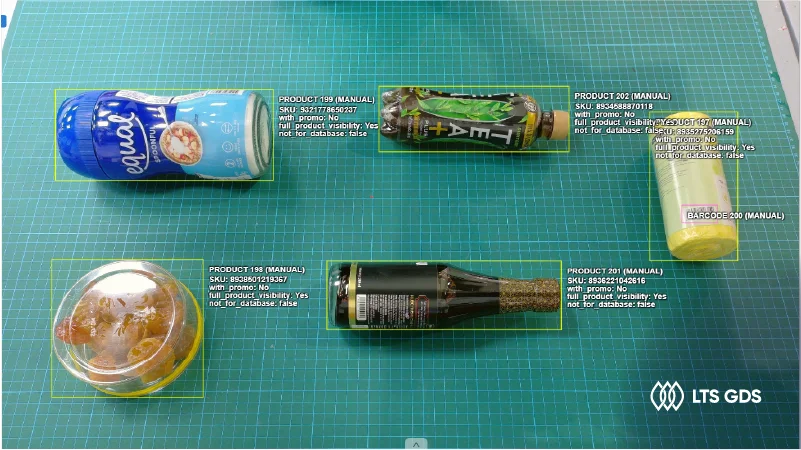
For this project, the client was building a training dataset focused on Stock Keeping Units (SKUs) in grocery environments. The goal was to help AI models accurately detect and recognize grocery products on shelves using visual data.
The client already had access to image data but needed a reliable partner to deliver high-quality 2D bounding box annotations under strict time.
What the client needs
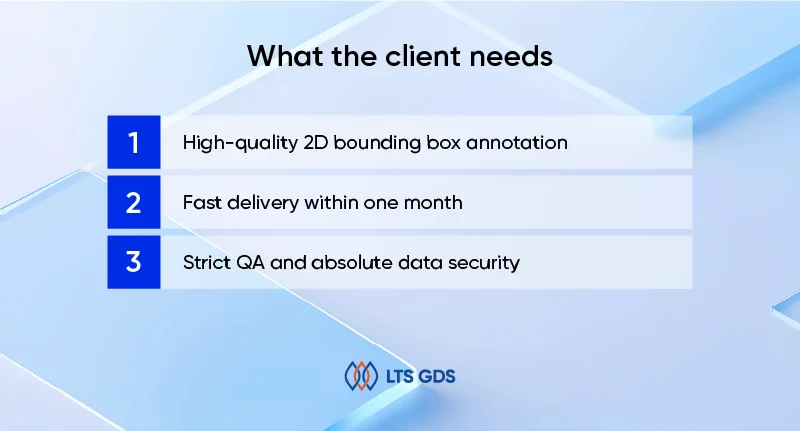
The client approached us with three clear requirements:
High-quality 2D bounding box annotation
Each grocery item needed to be labeled precisely to ensure the training data could support accurate object detection models.
Fast delivery within one month
The project timeline was tight. All annotations had to be completed within a single month to meet downstream model training schedules.
Strict QA and absolute data security
The client required a disciplined quality assurance process and full compliance with their data security standards.
How we did it
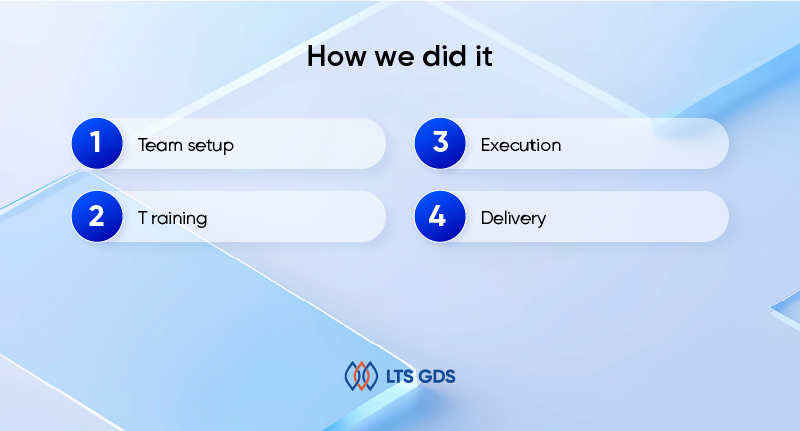
1. Team setup
This was an urgent project with a one-month deadline. Based on the client’s requirements, we quickly assembled a dedicated team of 8 annotators.
Before annotation began, we aligned with the client on:
– Annotation scope and expected output format
– Bounding box standards (tightness, occlusion handling, overlaps)
– Review and acceptance criteria
To keep communication efficient, we used:
– WhatsApp for fast, day-to-day coordination and urgent questions
– Client’s annotation tool for all labeling work
2. Training
Even though grocery products may appear straightforward, consistent bounding box quality requires clear rules. Differences in box tightness or object boundaries can reduce model performance if not handled properly.
Besides, sample images were reviewed together to align the team’s understanding. Annotators practiced on trial batches, which were reviewed before moving into full production.
3. Execution
Once training was completed, the team moved into execution process. The team focused on:
– Accurate box placement around each grocery item
– Careful handling of crowded shelves and overlapping SKUs
– Any unclear cases were discussed internally or escalated quickly to avoid delays.
– The four QA steps were applied to the execution process, resulting in an accuracy rate of 98%
4. Delivery
Completed annotations were delivered in batches according to the agreed timeline. Throughout the month, we kept the client informed of:
– Daily and weekly progress
– Annotation volume completed
– Accuracy status and QA findings
What the results have
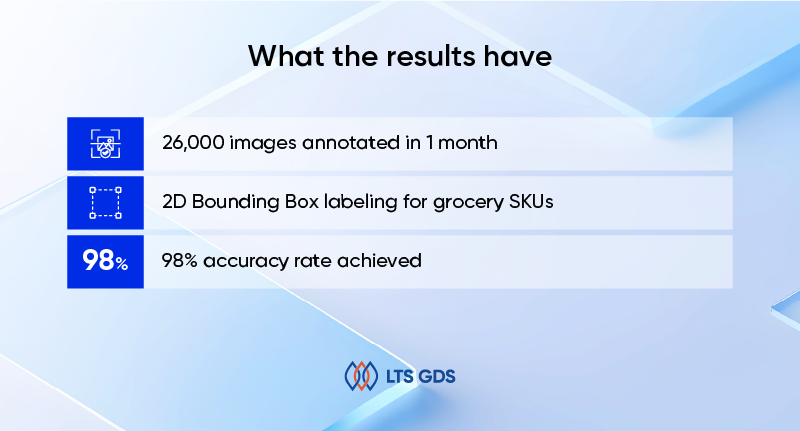
At the end of the one-month execution, the project was completed on time with the following results:
– 26,000 images annotated in 1 month
– 2D Bounding Box labeling for grocery SKUs
– 98% accuracy rate achieved