


Client overview
Our client is a Korean company specializing in digital twin and LiDAR solutions for various domains. The client already had raw image data collected from agricultural environments but needed a trusted partner to deliver high-quality segmentation annotation within a very short timeframe.
What the client needs
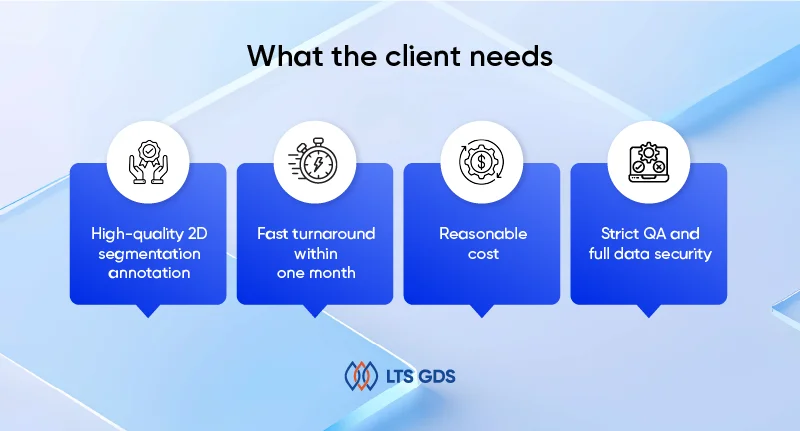
High-quality 2D segmentation annotation
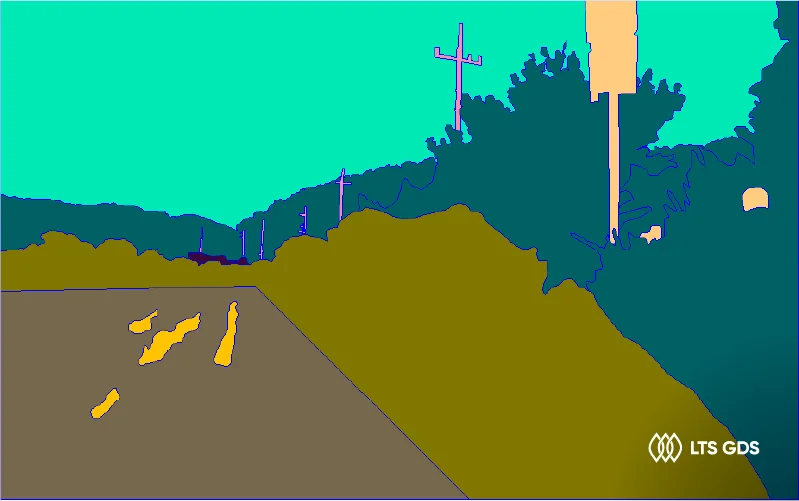
Each image needed pixel-level accuracy across multiple object classes. Precision was critical, as segmentation errors would directly affect the quality of the digital twin output.
Fast turnaround within one month
The project had a strict one-month deadline. All annotation work had to be completed and validated within that period.
Reasonable cost
The client needed a solution that balanced quality and speed without inflating costs.
Strict QA and full data security
A well-defined quality assurance process was required, along with complete compliance with the client’s security standards.
How we did it
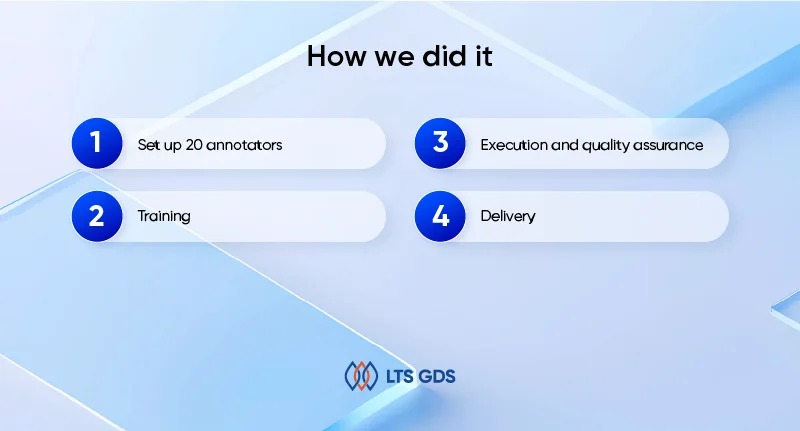
1. Set up 20 annotators
We built a dedicated team of 20 annotators with experience in 2D segmentation tasks. Before production started, we worked with the client to confirm:
– The full list of segmentation classes
– Labeling rules and class boundaries
– Expected output formats
– Review and acceptance criteria
– Tools used: KakaoTalk, Excel, and GDS’s internal annotation tool
2. Training
Segmentation annotation requires a shared understanding of class definitions and edge cases. Even small differences in interpretation can lead to inconsistent results. We conducted targeted training sessions focused on:
– Pixel-level segmentation techniques
– Clear separation between similar classes
– Handling unclear boundaries and overlapping objects
– Consistent treatment of shadows, reflections, and background noise
– Annotators completed trial tasks that were reviewed by QA leads. Feedback was shared quickly, and guidelines were refined before moving into full production.
3. Execution and quality assurance
Once training was complete, the team moved into full-scale annotation. The execution followed a batch-based workflow:
– Images were distributed evenly across the team
– Annotators performed detailed 2D segmentation for all required classes
– Each image was self-reviewed by the annotator before submission
– Completed batches were flagged for quality checks
– Questions and edge cases were discussed quickly via KakaoTalk to avoid delays
– A multi-step QA process was applied, achieving a 98% accuracy rate across the project
4. Delivery
Annotations were delivered in structured batches throughout the month, allowing the client to review progress and integrate the data gradually. This transparent delivery approach helped ensure the project stayed on track and aligned with the client’s expectations.
What the results have
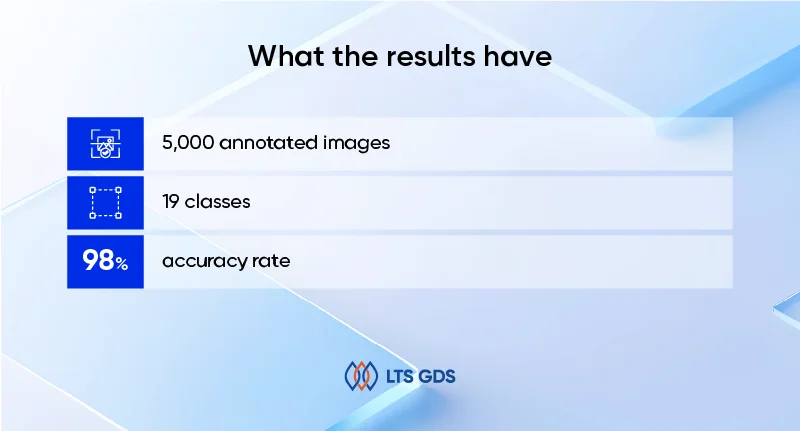
At the end of the one-month project, we delivered:
– 5,000 annotated images
– 19 classes
– 98% accuracy rate